Leviticus 4:1-12
Ministries > Thru the Bible with Dr. J. Vernon McGee
https://www.oneplace.com/ministries/thru-the-bible-with-j-vernon-mcgee/
Facebook Twitter Instagram YouTubeSin is in our DNA. It’s ugly, but it’s there by default. As we learn about the sin offering in Leviticus 4, notice how this passage discusses sin as our nature. God shows us He does not want us to live in the shadow of guilt. Instead, we can find true freedom and forgiveness in Christ’s blood. Through the sin offering, we are shown a beautiful picture in which sin is forever defeated and God is satisfied with us.
References
Announcer: How firm a foundation, ye saints of the Lord, is laid for your faith in his excellent word.
Steve Schwetz: The Word of God contains the remedy for man today. That's the wisdom our teacher, Dr. J. Vernon McGee, shares in this study on Thru the Bible. I'm Steve Schwetz, welcoming you aboard the Bible bus as our journey through the Old Testament book of Leviticus continues in chapter 4 with an offering never mentioned in scripture until this point. It's called the sin offering, and it has tremendous meaning for you and me today. So while you find your seat, here's a letter from a fellow passenger on the Bible bus. I thought I had more time. My name is Ihor, and I live in Ukraine. Not long ago, I received devastating news from my doctor. Soon after that, I discovered your program and decided to reach out for help. I have so many regrets, and I've made so many mistakes. I wanted to know if it was too late to change. Through the programs, I had begun to understand something about God's love, but I still struggled to believe that forgiveness could really be mine. I thought salvation was something I had to earn, something I had to make up for. When your team told me there was still time to make things right with God, I became frustrated. Patiently, they shared the gospel with me again. They explained that God was not asking me to earn his grace, he was simply asking me to receive it. For the first time, I understood. Right there on the phone, I prayed and asked Jesus Christ to forgive my sins, come into my life, and save me. Well, now that's grace in action, isn't it? Well, if you'd like to pray for Ihor and others like him, why don't you join our World Prayer Team? It's so easy. You can sign up right in our app or over at ttb.org or call us at 1-800-65-BIBLE if we can help. Now let's pray together as we open the book of Leviticus. Heavenly Father, thank you for the opportunity to confess our sins and be forgiven through the sacrifice of Jesus Christ. Help us to see ourselves as you see us and draw us closer to you each day. In Jesus' precious name, amen.
Dr. J. Vernon McGee: Here's Dr. J. Vernon McGee with our study of Leviticus chapter 4 on Thru the Bible. Now, friends, we come to the fourth chapter of Leviticus. We've been talking about the five offerings that are in these five chapters, and we have seen the first three offerings. They are called sweet savor offerings. And now we come to the first non-sweet savor offering. The first three were the burnt offering, the meal offering, the peace offering. Now we come to the first of two non-sweet savor offerings. The first is the sin offering, and that is sin as a nature. And then we're going to see the trespass offering, and that's sin as an act. You see, man actually is a sinner on two counts. He's a sinner by nature, and he's a sinner because of what he does. By the way, he does what he does because he is a sinner by nature. Now we see here the person of Christ in those first three offerings. Now we see the work of Christ on the cross for sin. There are several very striking features about the sin offering that set it apart from the other offerings and distinguish its importance. Now, first of all, I think this is something you can see quite easily. In the burnt offering, there were just 17 verses in that first chapter. In the meal offering, there were 16 verses in the second chapter. The peace offering we saw last time in the third chapter, 17 verses. Now the next chapter, chapter 5, the trespass offering, there are 19 verses. All are just about the same. But do you notice here in the sin offering? 35 verses, more than twice the number of verses in the first three offerings. Evidently, the Spirit of God thought this was very important. Now, the sin offering was an entirely new offering. Up to the time of Moses being given the instructions here in the wilderness for this sin offering, there is no record anywhere of a sin offering. There's no previous record of it occurring in scripture, and no heathen nation had anything that was even similar to it. Now, that in and of itself is quite interesting. Why? Well, this third very interesting thing to note is, from the time of the giving of the law, it became the most important and significant offering of all. You see, man was a sinner before the giving of the law, but actually it was the law that revealed to him he was a sinner, and it was offered during all of the feasts. It became all important during the time of the Passover, Pentecost, Feast of Trumpets, Feast of Tabernacles, and it was offered on the great day of atonement, Yom Kippur. It brought the high priest into the Holy of Holies, the sin offering. And then there's a fourth thing that makes it quite remarkable. It's in contrast to the burnt sacrifice, although it was made in the same place. For instance, in the law of the sin offering in Leviticus 6:25, I read, speak unto Aaron and his sons saying, this is the law of the sin offering. In the place where the burnt offering is killed, shall the sin offering be killed before the Lord. It's holy. In other words, actually, where the burnt offering leaves off, the sin offering begins. The burnt offering tells who Christ is. The sin offering tells what Christ did. In the burnt offering, Christ meets the demands of God's high and holy standard. In the sin offering, Christ meets the deep and desperate needs of mankind. In the burnt offering, we see the preciousness of Christ. In the sin offering, we see the hatefulness of sin. The burnt offering was voluntary. The sin offering was commanded. The burnt offering ascended. The sin offering was poured out, and that means down. One went up, the other went down. Now we have here in this chapter, and by the way, it goes into the next one also, we have the sin offering. Sin is a nature, and we have in the first two verses, sins of ignorance. Then verses 3 to 12, sins of the priests. Then sins of the congregation, 13 through 21. Then sins of the ruler, verses 22 and 26. Then sins of the common people, 27 to 35, and then you have the law of the sin offering over in chapter 6, 24 and 30. Now, will you note here, this I think is very important for us to see. We have here sins of ignorance. I'm reading now verses 1 and 2. And the Lord spoke unto Moses, saying, Speak unto the children of Israel, saying, If a soul shall sin through ignorance against any of the commandments of the Lord concerning things which ought not to be done, and shall do against any of them. Now, these are sins of ignorance. The emphasis is here upon a sin that's committed in ignorance. Now, if a man sinned willfully and deliberately, this offering did not avail. You'll recall the scripture says, he that despised Moses' law died without mercy under two or three witnesses. In other words, there was no salvation, and there is no salvation for a person today who willfully rejects Jesus Christ. And if you want an unpardonable sin, there's actually no act you commit. But if you willfully reject him, which is a state, of course, and not necessarily an act, but if you do that, my friend, there's no remedy. And that is what he's saying here. Now, sins of ignorance, I think, reveals the underlying truth that man is a sinner by nature. I don't want to be ugly, but I must say this to you. My friend, you're a sinner whether you know it or not. You may not commit a sin, but you're a sinner. You've got that nature, and that's the reason we commit sin is because we are sinners by nature. David says, in sin did my mother conceive me. Now, regardless, therefore, the estimation of any given time or custom, man is a sinner in God's sight. You and I are sinners by nature. We do those things that are contrary to God, and it's impossible for the natural man to do anything that'll please God. He doesn't have the capacity. He's a sinner by nature. And these sins of nature, and they are that. They are sins that must be called to our attention because it's sin regardless of who commits it. And the sin offering gave a profound conviction of sin that stands out in the literature of the race as there's nothing to compare to it. The deep guilt complex of man must be diagnosed before an adequate remedy can be prescribed. Listen to the psalm, Psalm 139, 23 and 24. Search me, O God, and know my heart. Try me and know my thoughts, and see if there be any wicked way in me, and lead me in the way everlasting. And that is what I call getting on the Lord Jesus Christ's couch instead of going to the psychiatrist. A great many people with a guilt complex today go to the psychiatrist, and the impression is given that the psychiatrist or the psychologist has a skill that the Word of God does not reveal. I personally think that is a wrong impression to give. I believe that the Word of God contains the remedy today for man. And if you have your hang-ups and you are bothered with a personality complex or problem, why don't you go really get on his couch and cry out, search me, O God, try me, see if there be any wicked way in me. And listen to David. He got up on God's couch and he confessed Psalm 51:4, against thee, thee only have I sinned and done this evil in thy sight, that thou mightest be justified when thou speakest and be clear when thou judgest. My friend, your problem, my problem is not because that our mother didn't give us all the love we should had when we were a little stinking brat. Our problem is we're a sinner by nature. And the thing to do is to get up on God's couch, tell him all about it. And if we did that, it'd be helpful. You see, the sins of ignorance were committed by a person who at the time didn't know that it was sin. Again, the psalmist, Psalm 19:12, who can understand his errors? Cleanse thou me from secret faults. Oh, how many of us need to go to God today and just confess that we're nothing in the world but just low down human beings. If you can't think of anything specially to confess, then just tell him that you want to confess because you're who you are. Mel Trotter tells about the time that he had a doctor on his mission board back in Grand Rapids, Michigan, and they got down on their knees every Saturday morning. Each board member would pray, and this man always would pray, Lord, if we've committed any sin, forgive us. And Mel Trotter got tired of him saying that little formula, that little Christian cliche you hear today. And Mel Trotter says to him, why don't you tell him what the sin is? And this doctor said, well, I don't know what it is. And Melchotta says, well, why don't you guess at it? And then Melchotta made the statement. He says, you know, he hit it the very first thing, the very first time he just hit it right. Who can understand his errors? Cleanse thou me from secret faults. Now we need to go to him. If a man sins through ignorance, rashness, or accident, God made provision for his deliverance. God has a remedy for you. I don't care who you are. Then in Numbers 35:11, it says, then ye shall appoint you cities to be cities of refuge for you, that the slayer may flee thither, which killeth any person unawares. God has a city of refuge for you when you commit a sin and you don't know what it is even. Chances are you do, but if you don't, go and tell him you're a sinner. Listen to John. My little children, these things write I unto you that ye sin not. And if any man sin, we have an advocate with the Father, Jesus Christ the righteous. Now Paul explains the reason that he was the chief of sinners and why he obtained mercy. First Timothy 1:13 and 15, who was before a blasphemer, persecutor, and injurious, but I obtained mercy because I did it ignorantly in unbelief, and the grace of our Lord was exceeding abundant with faith and love which is in Christ Jesus. This is a faithful saying and worthy of all acceptation, and Christ Jesus came into the world to save sinners of whom I'm chief. I remember my dad died when I was 14. I was put in the business world. I got with the wrong crowd, and I was out doing things, I'll be honest with you, that a man 25 years old was doing, and I was just 16 years old. And I'm not offering it as an excuse, but I really didn't know how bad it was. And then there came that day when I did come to Christ, and from that day to this, I look back and hate myself for what I did. Thank God, friends. There's a sin offering. He died, and I can go and tell him all about it. I don't have to crawl up on somebody's couch and tell him none of his business. But it sure is God's business. He dealt with my sin on the cross. Listen to the psalmist again, Psalm 32:5, I acknowledge my sin unto thee, and mine iniquity have I not hid. I said, I will confess my transgressions unto the Lord, and thou forgavest the iniquity of my sin. You see, that lifts the guilt complex, but the sin offering even taught its own inadequacy, It had to point to someone else. Sacrifice and offering thou didst not desire. Mine is. Hast thou opened burnt offering and sin offering hast thou not required. That sin offering pointed to Christ, and it pointed the way to God's perfect satisfaction and forgiveness. Having therefore, brethren, boldness to enter into the holiest by the blood of Jesus, by a new and living way, which he hath consecrated for us through the veil, that is to say, his flesh. And having a high priest over the house of God, let us draw near with a true heart and full assurance of faith, having our hearts sprinkled from an evil conscience and our bodies washed with pure water. Vernon McGee of sinner, can come into his presence with boldness. Why? Because Jesus was my sin offering, and it was for these sins of ignorance even. Now we have the sins of the priests, verses 3 through 12. If the priest that is anointed do sin according to the sin of the people, then let him bring for his sin which he hath sinned, a young bullock without blemish unto the Lord for a sin offering. Now the sin of the priest is considered first. Why? Well, he stood in the place of leadership. If he's wrong, the people were wrong. His sin's their sin. Like priests, like people, the Word of God says. He was to bring a young bullock, which was a most valuable animal of all, and the position of the one who sinned determined the type of animal for his sin offering, his sin sacrifice. His sin was no different, but his responsibility was greater. And you remember James, a very practical man, he said, my brethren, be not many masters, knowing that we shall receive the greater condemnation. That's James 3:1. My brother, why do you want to be a preacher? Makes you more responsible. Why do you want to sing a solo? It makes you responsible. Why in the world do you want to be a deacon or an officer in the church or teach a Sunday school class? You're more responsible than anyone else, and he'll hold you to it, by the way. And that's what he's saying here. We are told that, for the law maketh men high priests which have infirmity, but the word of the oath which was since the law maketh a son who's consecrated forever. And that's the difference between Christ, our great high priest, and the order of Aaron. They were just weak men like we are, and they had to have an offering, but our Lord, he offered for you and me. Then verse 4, he shall bring the bullock under the door of the tabernacle of the congregation before the Lord, shall lay his hand upon the bullock's head and kill the bullock before the Lord. Now this is the same ritual for the sin offering that you actually have with the burnt offering, a striking similarity. And then verses 5 and 6, and the priest that is anointed shall take the bullock's blood, bring it to the tabernacle of the congregation. The priest shall dip his finger in the blood, sprinkle of the blood seven times before the Lord, before the veil of the sanctuary. Now, to sprinkle the blood seven times before the veil secured God's relationship with the offender. Now, will you notice that's not all, and I'll go into this. And the priests shall put some of the blood from the horns of the altar of sweet incense before the Lord, which is in the tabernacle of the congregation, and shall pour all the blood of the bullock at the bottom of the altar of the burnt offering, which is at the door of the tabernacle of the congregation. Now, this may sound to you bordering on paganism, but has a wonderful spiritual message here. Now, to put some of the blood on the horns of the altar of incense, and that altar incense was the place of prayer. That indicates that Christ has made a sacrifice, that when you and I confess our sins, he's faithful and just to forgive us our sins, cleanse us from all unrighteousness, and we are restored to the privilege of worship and to the place of prayer and to fellowship. And it all's dependent on the blood of Christ. And almost all things are by the law purged with blood, and without shedding of blood is no remission. You see, the remainder of the blood was poured out at the bottom of the brazen altar. This satisfied the conscience of the sinner and removed any guilt complex. My friend, the thing for you to understand and for me to understand that when Christ forgives your sin, he forgives you, friend. Nothing more to be said about it. He has put it in the bottom of the sea, and it'll never be remembered anymore. He settles the sin question. That'll get rid of your guilt complex. Somebody, oh, I wonder if he forgiven me. Oh, my friend, he took it all away. He took it all away. This was the remedy, you see, for the conviction of sin, and the only one that could satisfy the mind and heart. And when you come to Christ and see him, you'll find him adequate. And we are told here that for the sin offering follows the same ritual as the peace offering. From here on, the fat's burned on the altar, and fellowship is complete and service is restored, you see. That fat, you remember, that means God's called you to enjoy the best. And we're told, and the skin of the bullock and all his flesh, with his head, with his legs, his innard, his dung, even the whole bullock, shall he carry forth without the camp unto a clean place where the ashes are poured out, and burn him on the wood with fire, where the ashes are poured out, shall he be burned. Now, at this point, we have a radical departure from the other offerings. The remainder of the bullock was taken without the camp, and it was burned there. Now, we believe that this is just simply an emphasis upon the exceeding sinfulness of sin. This animal was a sin offering, and there is no thought of the consecration or the person of Christ. Rather here, he is made sin for us. And I think even a deeper meaning is suggested in Hebrews 13. We have an altar whereof they have no right to eat, which serve the tabernacle. For the bodies of those beasts whose blood is brought into the sanctuary by the high priest for sin are burned without the camp. Wherefore Jesus also, that he might sanctify the people with his own blood, suffered without the gate. Let us go forth therefore unto him without the camp, bearing his reproach. For here we have no continuing city, but we seek one to come. My, we need to ponder this scripture well. Religion can never satisfy the heart or meet the holy requirements of God. Friends, only the death of Christ on the cross can give us forgiveness of sin. It took that. We are sinners by nature. We are not fit for heaven. And if God consigned this entire world into a lost eternity, the angels in heaven would still sing, Holy, holy, holy, and he's righteous and good. But thank God he didn't do that. He loved us, and our sin is frightful, but he was made sin for us. Oh, my friend today, if you've never turned to him and trusted Christ, see that he's adequate. See that he meets the deep need of your heart and your soul. And when you do that, you won't go to the psychiatrist. People think I'm against the psychiatrist. I'm not. I recognize there's certain problems that have to do with that which should be technical, but I'm talking about now old-fashioned sin, and there are too many trying to solve in a different way than God has provided. Now we're going to have to leave off there. We'll pick right up there next time. Until then, may God richly bless you. Learn more by clicking How to Know God in our app or at TTB.org. Or why don't you have a few resources sent to you by mail when you call 1-800-65-BIBLE, or just write to us at box 7100, Pasadena, California, 91109. In Canada, box 25325, London, Ontario, N6C 6B1. Join us next time as we continue to make our way through the Bible. Sin had left a crimson stain, he washed it white as snow.
Steve Schwetz: Today's study is always available, free to stream or download, thanks to the generous and faithful investments from your fellow Bible Bus travelers. Just go to ttb.org or download our app to listen again anytime. As always, we'd love to know what's God teaching you.
Related Episodes
Leviticus 3
Tuesday, November 17
Leviticus 2
Monday, November 16
Leviticus 1:3-17
Friday, November 13
About Thru the Bible
Thru the Bible takes the listener through the entire Bible in just five years, threading back and forth between the Old and New Testaments. You can begin the study at any time. When we have concluded Revelation, we will start over again in Genesis, so if you are with us for five years you will not miss any part of the Bible.
Other Thru the Bible Programs:
Thru the Bible - Minute with McGee
Thru the Bible - Questions & Answers
Thru the Bible - Sunday Sermon
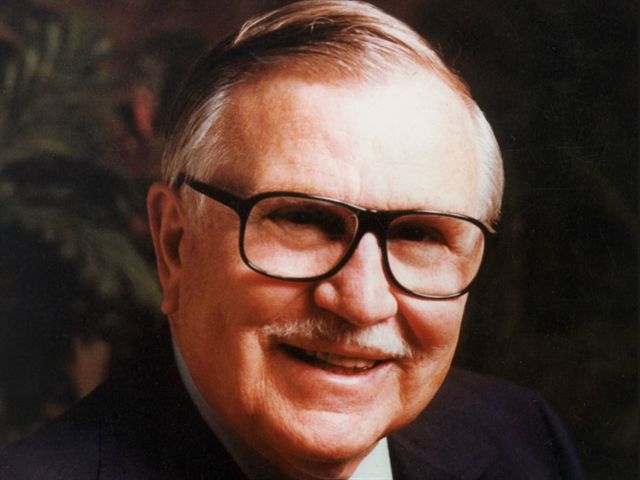
About Dr. J. Vernon McGee
John Vernon McGeewas born in Hillsboro, Texas, in 1904. Dr. McGee remarked, "When I was born and the doctor gave me the customary whack, my mother said that I let out a yell that could be heard on all four borders of Texas!" His Creator well knew that he would need a powerful voice to deliver a powerful message.
After completing his education (including a Th.M. and Th.D. from Dallas Theological Seminary), he and his wife came west, settling in Pasadena, California. Dr. McGee's greatest pastorate was at the historic Church of the Open Door in downtown Los Angeles, where he served from 1949 to 1970.
He began teaching Thru the Bible in 1967. After retiring from the pastorate, he set up radio headquarters in Pasadena, and the radio ministry expanded rapidly. Listeners never seem to tire of Dr. J. Vernon McGee's unique brand of rubber-meets-the-road teaching, or his passion for teaching the whole Word of God.
On the morning of December 1, 1988, Dr. McGee fell asleep in his chair and quietly passed into the presence of his Savior.
Contact Thru the Bible with Dr. J. Vernon McGee
Mailing Address
Thru the Bible, Inc.
P.O. Box 7100
Pasadena, CA 91109
In Canada:
Box 25325,
London, Ontario
N6C 6B1
Phone Number
(626) 795-4145 or
(800) 65-BIBLE (24253)


