Sekulow
Ministries > SEKULOW with Jay Sekulow
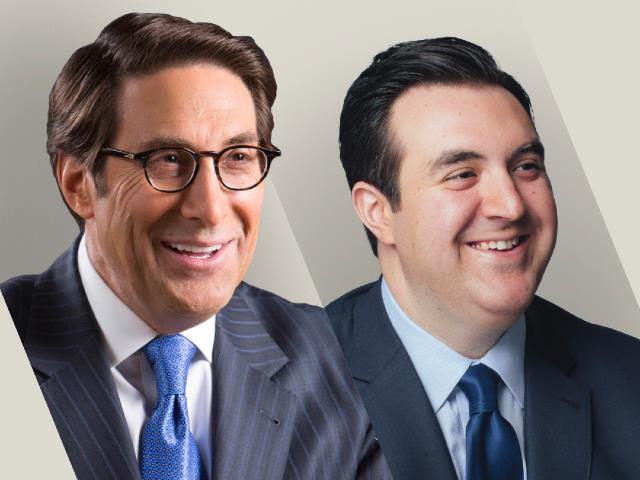
Logan and Jordan Sekulow are joined by Will Haynes to discuss The New York Times rushing to delete their report following our show yesterday.
Jay Sekulow: After our show yesterday, The New York Times rushes to delete their report. Keeping you informed and engaged. Now, more than ever. This is Sekulow. We want to hear from you. Share and post your comments or call 1-800-684-3110. And now your host, Logan Sekulow.
Jay Sekulow: You may remember yesterday, by the way, it's Logan Sekulow. Will Hains in studio. You may remember yesterday we did the first half of the show on The New York Times about their report over in Israel. One of their senior journalists was there saying, "You know what? Still, after three years, something does not seem right to these Israelis. They still seem to think they were the victims of the October 7th attack that killed 1,200 of their people and kidnapped 250 and led to a lot of war that led beyond that." And again, of course, those were not military people. Those were people at a music festival, people in their local communities.
Jay Sekulow: That grotesque sentence, that sentence that really did not only just state and imply that Israelis still think, and how dare they, still think that they are the victims of October 7th. Well, you know what? We made quite a stink about it yesterday. We spent a good portion of this show talking about this. And we said we doubted actually we would hear from The New York Times, that The New York Times is probably not doing anything about this. They will just let it slip by.
Jay Sekulow: But you know what? It must have gotten to the right people, because later yesterday, in the evening, The New York Times made an adjustment to their article, Will.
Guest (Will): That is right. So if you remember, specifically, it said, "But Israelis but the Israelis still believe largely that they are the victims of October 7th." That is the original post that was in that article. Well, they updated it with an editor's note, September 16th. So two days after this article went up, two days after the article went up, by the way, but only hours after we did our show.
Guest (Will): Right. They have this editor's note. "Because of an editing error, an earlier version of this article included a statement that was intended to convey Israeli's perception of the government's military response to the October 7th terror attack in relation to the attacks, but inadvertently suggested that Israeli's experience as terror victims was a matter of perception. It has been removed from the article."
Guest (Will): So not just a note clarifying but actually removing the sentence from the article.
Jay Sekulow: I have to applaud for a moment. We gave them a lot of grief yesterday. Rightfully so. And someone in that newsroom agreed with us. And I have to give them a bit of applause here and say, "You know what?" Because you could have just made an adjustment to that sentence. You could have just quickly made a, "Hey, new version of the article is up." Or just let it slide by. Because you know what, we, we, we can make a stink. A lot of people can. That does not necessarily mean The New York Times is going to listen.
Jay Sekulow: So I have to say, thank you to whoever it is on staff in The New York Times that put out this statement. Even though I doubt it was inadvertently, I will say that is probably being very light on that word. But the fact that they admitted that it said in there that this was the fact that how dare Israelis essentially consider themselves the victims of October 7th. The fact that they even said it in pretty clear English, borderline apologizing.
Jay Sekulow: Could we put that statement back up again? The statement from The New York Times. Let's get it up if we could get it back up there again. The last sentence of that, you know, that says, no, this was the original. I meant the new, the new one that we had up there. Yeah, there it is. "Because of an editing error, an earlier version of this article included a statement that was intended to convey," let's skip that. "Inadvertently suggested that Israeli's experience as terror victims was a matter of perception. It has been removed from the article."
Jay Sekulow: Good on you editors of The New York Times. I do not say that a lot. But I will say there are moments where this audience shows up and answers the call, and you did it, and we got a response from, you know, the only news that is fit to print, Will.
Guest (Will): It is all the news. It is not the only news that is fit to print.
Jay Sekulow: Oh, sorry. Sorry.
Guest (Will): You said it wrong. Democracy dies in the darkness.
Jay Sekulow: One of us is a subscriber. One of us used to pay for the games only. That being said, phone lines are open for you at 1-800-684-3110. We are not going to spend the whole hour on this, but there is a lot to cover in this, including some news from my friend Hassan Piker. We are going to discuss that coming up.
Jay Sekulow: Phone lines are open for you like I said, 1-800-684-3110. Thank you to all of you who made an earthquake of noise after this show. The New York Times had to respond. We will be right back.
Ad Narrator (Male): The challenges facing Americans are substantial. At a time when our values, our freedoms, and our constitutional rights are under attack, it is more important than ever to stand with the American Center for Law and Justice. For decades now, the ACLJ has been on the front lines, protecting your freedoms, defending your rights in courts, in Congress, and in the public arena. And we have an exceptional track record of success. But here is the bottom line. We could not do our work without your support. We remain committed to protecting your religious and constitutional freedoms. That remains our top priority, especially now during these challenging times. The American Center for Law and Justice is on your side. If you are already a member, thank you. And if you are not, well, this is the perfect time to stand with us at ACLJ.org where you can learn more about our life-changing work. Become a member today. ACLJ.org.
Ad Narrator (Male): Welcome to the all-new ACLJ app. Expert analysis and insight Big Tech cannot censor. Customize your news and get real-time alerts on the issues you care about. Advocacy is now at your fingertips. Take action, make a difference. Support the causes you care about with just one tap. Be the first to know. Breaking news alerts sent straight to your inbox. Everything you need all in one place. Stay informed, stay empowered. Download today. We are so excited to announce the ACLJ's brand-new app. Completely redesigned to provide you with the best tools available to partner with us at the ACLJ. You can watch the daily Sekulow program, sign the petitions, customize your ACLJ membership experience, donate with the click of a button, and receive up-to-the-minute critical updates that the mainstream media cannot censor. Just scan the QR code on your screen or go to your phone's App Store. Search ACLJ and click install. It is that simple.
Jay Sekulow: Welcome back to Sekulow. My brother Jordan Sekulow joining us in studio now. Let's reset a bit of what happened. Yesterday we came on the show, we talked to you about The New York Times report that was covering a new documentary that was out at the Venice Film Festival about Gaza called Gaza, of course, talking about the situation from a point of view that surely paints Israel as, as the villain in this story.
Jay Sekulow: However, The New York Times, they were talking about it, and in this report from one of their senior reporters from the Middle East, from Jerusalem, who was stationed there said, "Hey," in pretty much the exact quote, I think we can pull it up here, that quote that originally it said that "Israelis in general largely still consider themselves the victims of October 7th."
Jay Sekulow: That is the quote, "But Israelis still largely view themselves as the victims of October 7th." We made a stink about this because, of course, they do. You can have a disagreement by the way that the Israeli response to October 7th and still see that the victims of October 7th, as an isolated incident, was of course the Israeli people, as 1,200 people were murdered. Innocent civilians were murdered. And of course, you had hundreds more kidnapped and captured and held as hostages. Nobody disputes that part of it. You can dispute what came before, you can dispute the response. But you cannot dispute the fact that October 7th, again, was what was considered the Israeli 9/11. I mean, this is something where thousands of, you know, people, I mean, the reverberation around the world that happened from it.
Jay Sekulow: But of course, we know nearly three years later how history has changed, how perception has changed. But we came on here, we made a stink about it. Some others made a stink about it. You all, the listener, the viewer, went on your social media channels. You shared that you found this to be disgusting and vile and inappropriate.
Jay Sekulow: And look, for The New York Times, a lot of times you do not feel like you are going to, maybe you are talking to a brick wall. But we made noise. And this is why it is important to make noise because The New York Times had to respond. And the simplest explanation of this is they took the sentence and deleted it from the article and put out a statement. That is a victory, folks. Even if they want to caveat it in some, you know, word salad post that they are responding to.
Jay Sekulow: This is a victory for those of us that stand up for truth in journalism.
Guest (Will): Well, and once again, when we talk about what is the solution, how do you combat bad speech? It is with more speech. It is pointing out the bad speech. This is not censorship. This is not some sort of canceling The New York Times. What this is is pointing out the errors and them having to respond because it is so obvious. You know what it also, it vindicates what we said yesterday of the arbitrariness of putting this sentence in. Like you did not have to say, "But Israelis largely view themselves," because that is a given when it comes to the massive terror attack that happened on them on October 7th.
Guest (Will): So there, even they did not have to change the sentence. They just deleted it, and the story stood as it was. It shows that it was a biased sentence, that it was never supposed to exist in in real journalism and news. And this was their response: Editor's Note, September 16th, which by the way, the article, which probably not a ton of people were going to go read, had been up for two days. So it was after the outcry of a couple of days later that they did take action.
Guest (Will): And they said this, "Because of an editing error," already there. The editing that, yeah, we should have taken this out.
Jay Sekulow: The editor probably was not even ready for it when it came out.
Guest (Will): Right. "An earlier version of this article included a statement that was intended to convey Israeli's perception of the government's military response to the October 7th terror attack in retaliation to the attacks." Word salad. That sentence there means nothing.
Jay Sekulow: They could delete that sentence as well.
Guest (Will): Yeah, that also, editing error, editors. "But inadvertently suggested that Israeli's experience as terror victims was a matter of perception." That is the one you need. "It has been removed from the article." It shows everything that we said yesterday, Jordan, about, "This is ridiculous, this is disgusting." This is, "Imagine if they said in an article about the war in Afghanistan," said, "But America still largely considered themselves the victims of 9/11." That is the equivalent here.
Guest (Will): It is you have to celebrate the wins when you get them in institutions like The New York Times.
Guest (Jordan Sekulow): You do. And the fact that The New York Times admitted it was a terror attack on Israelis.
Jay Sekulow: And when you are attacked by terrorists, what does, what does the international community okay with when you respond?
Guest (Jordan Sekulow): And for the most part, the US has set the precedent that when you are attacked by terrorists, you have every right to go in and kill every single person, destroy every single piece of infrastructure you need.
Jay Sekulow: That is a declaration of war.
Guest (Jordan Sekulow): So that that terrorist group is never operable again and never harms one of your citizens again. And Israel has not even done that in the Gaza Strip. If you look at, again, what the United States has done in these multi-long efforts that still existed even in the post-Bin Laden world to take out terror groups that threaten the United States of America.
Guest (Jordan Sekulow): And we have understood as a world that when a terrorist attack, you can respond. And you do not have to respond proportionally. What? Would you like Israel to go in, kidnap a few hundred Palestinians, rape a few Palestinians, put it on camera, and then kill a thousand, and then say, "Okay, eye for an eye"? That is not how the world works. When you are a terrorist, and when you engage, and when you elect a terrorist regime to run your territory, you will die like most terrorists, ultimately, at the hands of a stronger party, which is what is still going on in that conflict, which does not get as much news. It is the same message to the Iranian terrorist. And the Iranian people, if you do not ultimately stand up, what will your government look like in 20 years? Probably not a place your children are going to want to live.
Jay Sekulow: Right. I think that is one of the things.
Guest (Jordan Sekulow): If they are even alive at that point.
Jay Sekulow: That is one of the big notes we need to take from this is that just because, clearly, the media has decided which side is good and which side is bad here. You still cannot change history. You still cannot go back, even if you have a point of view that says Israel is doing too much.
Guest (Jordan Sekulow): This attack, not that attack.
Jay Sekulow: You cannot take a terrorist attack and then decide, "Oh, because of three years later."
Guest (Jordan Sekulow): I mean, this is why I have even asked them, if they did exactly what Hamas did, whose side would they be on? Because they can be on Hamas' side. So they are okay with raping and killing women on camera. They are okay with killing children, parents in front of them, killing them, bodies being destroyed, giving dead bodies back, playing like they are going to be turned alive, those who were kidnapped. Would the world say, "Okay, you know what? Let's celebrate Israel in this struggle. Free the Israelis." You know, would we, is that who would be on stage at concerts and in these mass rallies in London and all over the country? Would Antifa endorse Israel because they said, "You know what? We are just going to do exactly to the Gazans what they did to us. So we will kill just as many people. We will kidnap just as many, and we will kill just as many that were kidnapped. We will put some videos up of us doing it and worse things. And then we will turn some over if you make concessions to us." Then what does the world say?
Jay Sekulow: I mean, is that how they would like us to start conducting military actions?
Guest (Will): Well, and once again, when they use these faux terms of proportional response, that is the very question you are asking. Is that what they look for when they say proportional, meaning,
Jay Sekulow: There is nothing proportional response to a terrorist attack.
Guest (Will): And once again,
Jay Sekulow: A proportional response is you have to kill the terrorist. And the terrorists, they, they hide behind women and children and in hospitals. We know this. I do not know why the world will not accept that as just a fact that terrorists are bad people. Do not wave their flags. It does not mean that you have to agree with the other side 100%. It means do not jump in bed with terrorists who ultimately would make you if you are part of that LGBTQ community, the next enemy. I mean, these, these leftists just do not understand who they are dealing with. And unless you have been in that part of the world, you will never understand. And yes, they will take your support now, and they will cut your head off next year.
Guest (Will): Well, and that is exactly what we even talked about yesterday is that it is not even as ridiculous as the statement is, it reveals all the bias, but it also, The New York Times has created a framework. The New York Times as well as the people on the left that have been marching around saying, "To the river to the sea," and things of that nature and the protest on campus. They have created an environment where violence against Jews has become normalized and okay. And you have seen the spike in the hate crimes against specific people. And it it really does stem from creating these narratives. By using old tropes of saying, "Look, the Israelis see themselves as the victims." You you almost, it is comical if it were not so serious how much they fall into the traps of history that we have seen over and over and over again. The way that people decide, "You know what we are going to do? We are going to blame the Jews again and make them say, 'Oh, they just are seeing themselves as the victims.'" They fall into these traps over and over, and they make it seem like culturally it is okay for people to go even further. They were caught here, it was called out, they had to correct. And I also think it is interesting, we had a fun time yesterday morning trying to gift the article to each other because I am the account holder, as you mentioned.
Jay Sekulow: The subscriber.
Guest (Will): I am having to send the gift article to everybody because, you know, they have got their paywall. They made their corrected article that they put out open to everyone. They personally gifted it to the world to to show how good they are. Pat themselves on the back that they corrected this because of their editing error.
Jay Sekulow: Yeah, I want to hear from you now though. We have a few lines open for you at 1-800-684-3110. And look, you know that this has been a part of our fight here at the ACLJ for a number and number of years, decades at this point. So when you support the work of the ACLJ, that is also what you are supporting. We are also going to talk a little bit more about some of the work of the ACLJ coming up and how you can get directly involved. If you want a little spoiler on how you can get directly involved, go to ACLJ.org/sign right now and sign the petition. Join us here at the ACLJ. It is a really interesting fight. Maybe you can get yourself a little bit engaged with it. Understand what we are going to talk about even before we get to it a little bit later on the show. Again, that is at ACLJ.org/sign.
Jay Sekulow: Phone lines are open for you. 1-800-684-3110. 1-800-684-3110. We will be right back with more on Sekulow. Do not go anywhere. Just a moment.
Ad Narrator (Male): Welcome to the all-new ACLJ app. Expert analysis and insight Big Tech cannot censor. Customize your news and get real-time alerts on the issues you care about. Advocacy is now at your fingertips. Take action, make a difference. Support the causes you care about with just one tap. Be the first to know. Breaking news alerts sent straight to your inbox. Everything you need all in one place. Stay informed, stay empowered. Download today. We are so excited to announce the ACLJ's brand-new app. Completely redesigned to provide you with the best tools available to partner with us at the ACLJ. You can watch the daily Sekulow program, sign the petitions, customize your ACLJ membership experience, donate with the click of a button, and receive up-to-the-minute critical updates that the mainstream media cannot censor. Just scan the QR code on your screen or go to your phone's App Store. Search ACLJ and click install. It is that simple.
Ad Narrator (Male): The challenges facing Americans are substantial. At a time when our values, our freedoms, and our constitutional rights are under attack, it is more important than ever to stand with the American Center for Law and Justice. For decades now, the ACLJ has been on the front lines, protecting your freedoms, defending your rights in courts, in Congress, and in the public arena. And we have an exceptional track record of success. But here is the bottom line. We could not do our work without your support. We remain committed to protecting your religious and constitutional freedoms. That remains our top priority, especially now during these challenging times. The American Center for Law and Justice is on your side. If you are already a member, thank you. And if you are not, well, this is the perfect time to stand with us at ACLJ.org where you can learn more about our life-changing work. Become a member today. ACLJ.org.
Jay Sekulow: Welcome back to Sekulow. I do want to hear from you at 1-800-684-3110. You are on hold, stay on hold, we will get to you. I do want to pivot just a little bit here and talk a little about the ACLJ work. This is a story that made a lot of news, and you may find yourself having a lot of questions about it. And the ACLJ has decided to get involved as well. I am going to let Will kind of set up the origin of this story. And then how you can get involved. Again, I encourage you to go sign a petition and get yourself educated because look, this is a heavy topic. I will say if you are listening with small children, we have already talked about some pretty hardcore topics already today. So you may have already changed the channel. But this one is just one that is very nuanced and is, we got to, we got to really think about it. But of course, it involves the fight for life.
Guest (Will): That is right. This involves an individual, a nurse from Alaska that agreed to be a surrogate for a California family. They was going to carry their child. And during that course of that pregnancy, there was a diagnosis for a heart syndrome that could have been possible as as they do tests and things through the normal course of that. The parents in this situation, those that had contracted with this surrogate then were pointing to provisions in the surrogacy agreement that if there were severe fetal abnormalities, they asked this this individual to abort the child to end the pregnancy.
Guest (Will): And she bravely refused and said that she believed that that the child deserved to live, to move forward. And now there is a dispute that is headed towards the Supreme Court over this entire situation. They were trying to get essentially damages from the nurse for violating their agreement. It is a very complex story, but at the heart of it, it is the work that we do here, and that is standing up for the unborn. And that is why we are engaging this, Jordan.
Guest (Jordan Sekulow): Right. And I mean there, there is jurisdictional issue here about should it be in Alaska, should it be in California courts. So that is why it is an emergency appeal to the Supreme Court. But what is really at stake here is this. You might hear the word contract in the United States of America and think, "Well, if you make a contract with someone it is all good." You cannot contract things that are illegal. You also there is, you cannot do it when someone is under duress, including financial duress. So there is a lot of things you can argue to say, you know what, when I signed these provisions, I did not understand what I was even signing. I did not have the correct information. I was under duress and pressure that there was no issues to deal with here, and that that would never really happen.
Guest (Jordan Sekulow): And again, I add a fourth point, which in many states, if you walked down the street and and shot a pregnant woman, and she died as well as the child growing inside of her, you are charged with a double murder. Now, I know in the United States where we have states that do allow abortion, we have laws on the books that make no sense because on the one hand, the murderer gets charged with a a double murder, but the abortionist in a state where abortion is legal does not get charged with murder at all. In fact, it is it is legal.
Jay Sekulow: Legal, yeah.
Guest (Jordan Sekulow): So in the same situation, you know, inside the womb. So in this case, can you contract murder? Can you contract the taking of life? Is that something that you can then force someone to go and have to follow inside a contract, or is that something that again, a contract, a contract should not be able to force?
Guest (Jordan Sekulow): And issue here is, is there jurisdiction? It is a reminder for everyone in the United States, read, when you sign contracts that involve lives, involve children, you do not just do that on your own. And in fact, that is why I bring up that duress argument as well. But here I think what is at stake is in the future of this is to make sure in the United States that it is clear that if these provisions are allowed, so that those out there maybe considering being a surrogate, know that at any point in time in under US law, they can tell you you have to go have an abortion and get rid of this life that you have been growing. Or we are going to say, "No," that that is, that is, this is a treatable illness. This was not a life-threatening illness that was found. And you know, a lot of these tests they think.
Jay Sekulow: Yeah, it is a.
Guest (Jordan Sekulow): But this was something that could have been treatable for their whole life, totally normal life. So not a serious medical complication at all. And yet still, that these parents said, "Abort, or we come after you."
Jay Sekulow: Yeah, and that is what is happening and that is the precedent that is going to be set. Because right now, the baby has been born. I want to make sure that is clear.
Guest (Jordan Sekulow): But there are disputes there, too.
Jay Sekulow: There are disputes of who has custody and all of that. So what this is going to do is this at least, Will, because these are very complicated and very 21st-century, if you will, rules that need to be set, this will at least have, like Jordan said, ruling potentially from the Supreme Court of the United States that says, "This is what has to happen."
Guest (Will): Well, and once again, as as we even said, it is not just one issue at stake here. There is jurisdictional issues, custody issues, contractual issues. All of those are being kind of laid bare here. We are engaging at the ACLJ by filing a brief. We filed it this week, this Tuesday actually, at the Supreme Court. This is what we think is is very important work. It is it is pro-life work. But it is one of those things that you can go read the article up at ACLJ.org. It is titled, "She Said No to Abortion. ACLJ Files Emergency Supreme Court Brief in Surrogacy Case."
Jay Sekulow: Maybe you can get involved.
Guest (Will): Right, exactly. These these are issues that are very complex. And that is one of the reasons why it is amazing that we have such great attorneys here that are able to look at this and be like, "This is the way we need to engage this. This is the way that this topic needs to be addressed." And you are helping that by signing petitions, by supporting the work, by donating. All of that goes towards things like this.
Jay Sekulow: I want to take a quick call. Let's go to Bill in Wyoming. Bill, go ahead.
Guest (Male): Yeah, thanks for taking my call. Could you help me get take care of my confusion because I see signs and hear these women say, "Hands off my body. Stay away from my body." Now I am talking about when this gal was carrying the baby. And yet this is happening. Where the women's groups and all this kind of deal, you know? Could you help me with that confusion?
Jay Sekulow: Of course, there is hypocrisy always in the fight for life. It feels like it is something that we have to deal with all the time when you actually get down to what it is because it never and rarely is a fight for life. It is a fight for abortion. But let's, you know, take this moment to realize that we live in a very, very complicated society where you can have a contract that says you can end a life in some states and not in another. Okay, well what does that look like? How does it play out? We know morally where we stand on this issue, of course. But there is always going to be a difference between the morality of which we believe in and the law of the land.
Guest (Will): Well, and once again, as Bill is saying, "My body, my choice" is the mantra. In this one, that is completely broken because it is more like, "Your body, our choice," is the way that they were trying to make this play out. And in in this entire discussion, the surrogate, who was carrying the child, was thinking of the life of the child and wanting to maintain that, wanting to save that. The the child has been born, had surgery immediately for that heart defect. And then it is always remarkable then also when the the parents are like, "Okay, well now we want custody as well." So there are so many issues, but it is it is complex. It is not something that you are driving down the road or probably like, "You know, I wonder about the complexities of contract law when it comes to surrogacy if there is a birth defect."
Jay Sekulow: Or setting your standards.
Guest (Will): But these are important, Jordan. We have to engage these type of issues.
Jay Sekulow: Yeah, I mean surrogacy, surrogacy itself can be very controversial. We know it is to a lot of our listeners. So that issue alone is controversial. But this then gets into that next level of of controversial, which is what are you going to be allowed to contract if we are going to allow surrogacy to to move forward in our country and the world? Can you contract that a surrogate has to terminate the life that her body is growing at any point? And is that a is that a good contract? Is that a or is it void? Is that a contract that you cannot contract to do illegal things? That is not, that contract, you cannot just contract anything you want. They get thrown out. So that is also part of the argument here, which we hope is made loud and clear ultimately as these kind of cases progress.
Jay Sekulow: We will continue this conversation, of course, go back sort of to the fight against anti-Semitism that is seems like a daily topic here. Phone lines are open for you. 1-800-684-3110. Second half hour comes up. If you do not get it on your local station, find us broadcasting. We will give you a podcast or on ACLJ.org.
Ad Narrator (Male): For decades now, the ACLJ has been on the front lines, protecting your freedoms, defending your rights in courts, in Congress, and in the public arena. The American Center for Law and Justice is on your side. If you are already a member, thank you. And if you are not, well, this is the perfect time to stand with us at ACLJ.org where you can learn more about our life-changing work. Become a member today. ACLJ.org.
About SEKULOW
The American Center for Law and Justice (ACLJ) focuses on constitutional law and is based in Washington, D.C. The ACLJ is specifically dedicated to the ideal that religious freedom and freedom of speech are inalienable, God-given rights. In addition to providing its legal services at no cost to our clients, the ACLJ focuses on the issues that matter most to you — national security, protecting America's families, and protecting human life.
About Jay Sekulow
Dr. Jay Alan Sekulow is Chief Counsel for the American Center for Law and Justice (ACLJ), a legal and educational not-for-profit organization that focuses on constitutional law, the defense of freedoms of speech and religion, and international human rights. He is also Chief Counsel of the European Center for Law and Justice (ECLJ) based in Strasbourg, France, and the Slavic Center for Law and Justice (SCLJ) in Moscow, Russia. The ACLJ also has an affiliate office in Jerusalem, Israel.An accomplished and respected judicial advocate, Sekulow has presented oral argument before the U.S. Supreme Court in twelve cases in defense of constitutional freedoms. Several landmark cases argued by Sekulow before the U.S. Supreme Court have become part of the legal landscape in the area of religious liberty litigation; these cases include Mergens, Lamb's Chapel, McConnell v. FEC, Operation Rescue v. National Organization for Women, and most recently Pleasant Grove City v. Summum.
In 2009, Townhall Magazine named Sekulow to its "Townhall of Fame" and recognized him as "one of the top lawyers for religious freedom in the United States." In 2007, the Chicago Tribune concluded that the ACLJ has "led the way" in Christian legal advocacy. In 2005, TIME Magazine named Sekulow as one of the "25 Most Influential Evangelicals" in America and called the ACLJ "a powerful counterweight" to the ACLU. Business Week said the ACLJ is "the leading advocacy group for religious freedom." Sekulow's work on the issue of judicial nominees, including possible vacancies at the Supreme Court, has received extensive news coverage, including a front-page story in The Wall Street Journal. In addition, The National Law Journal has twice named Sekulow one of the "100 Most Influential Lawyers" in the United States (1994, 1997). He is also among a distinguished group of attorneys known as "The Public Sector 45" named by The American Lawyer (January/February 1997). The magazine said the designation represents "45 young lawyers outside the private sector whose vision and commitment are changing lives."
Sekulow brings insight and education to listeners daily with his national call-in radio program, Jay Sekulow Live!, which is broadcast throughout the country on nearly 850 radio stations. Sekulow also hosts a weekly television program, ACLJ This Week, which tackles the tough issues of the day. He is also a popular guest on nationally televised news programs on ABC, CBS, NBC, CNN, FOX News, MSNBC, CNBC, and PBS.
Contact SEKULOW with Jay Sekulow
Mailing Address
American Center for Law and Justice
PO Box 90555
Washington, DC 20090-0555c
Legal Helpline
Phone: 757-226-2489
Fax: 757-226-2836
Member Services757-802-9160
Radio Call-in Number1-800-684-3110
(from 12-12:30 PM EST/EDT.)
Petition Call-in Number1-877-989-2255


